

When I worked at a winery tasting room in southern New Jersey, I often had the chance to clarify one of wine’s biggest misconceptions: the things you “taste” in the wine aren't in the wine. No apples, no cranberries, no honeysuckle, and no leather (thank goodness) go into the winemaking process. Techically, the only things you need to make wine are grapes and time. In today's modern world, there are a few more things winemakers can add, but that's the bare bones of it.
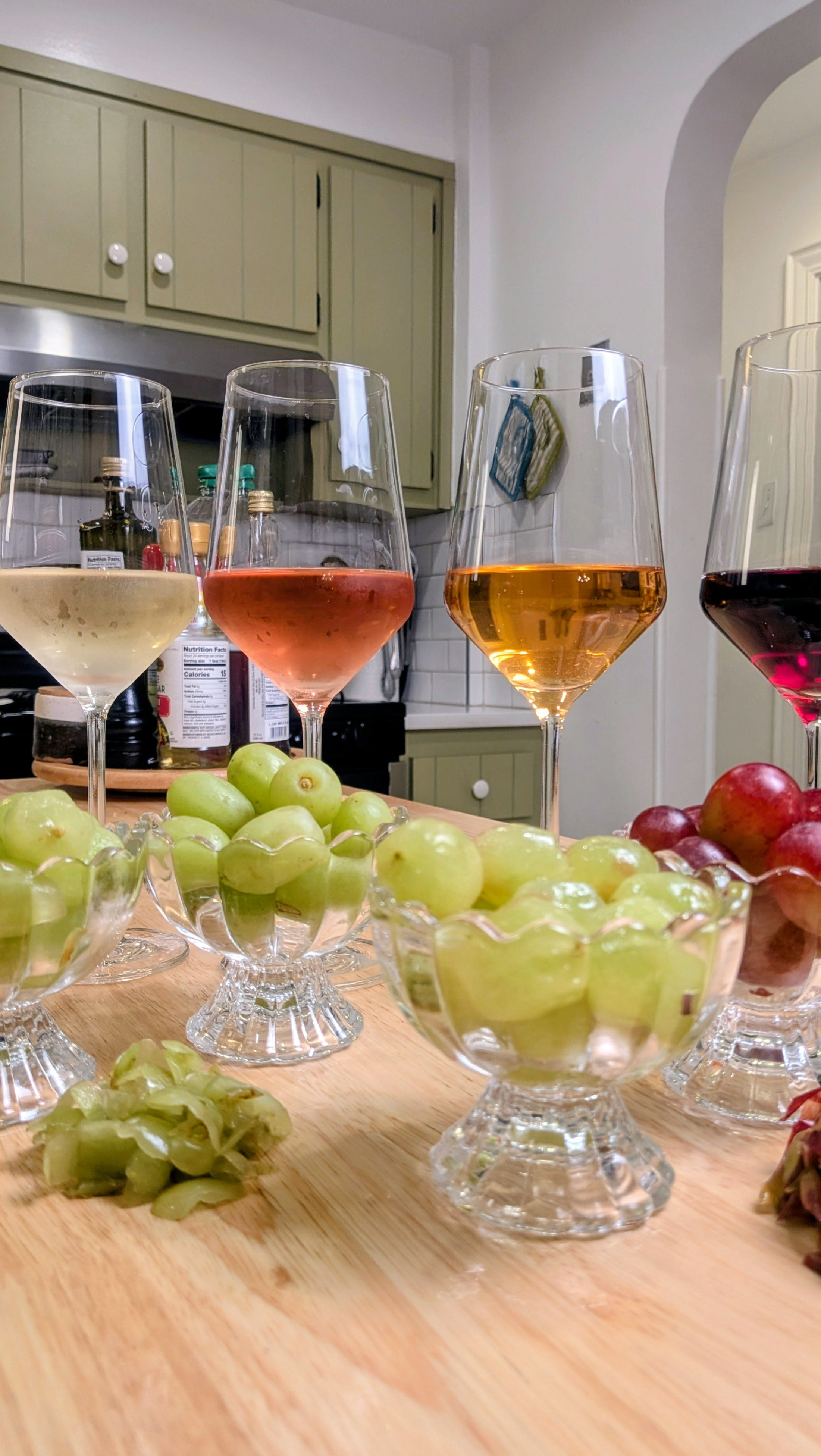
The core of fermentation is the conversion of sugar into alcohol, thanks to tiny microscopic yeast. These microbes are naturally found on grapes; so when I say all you need are grapes and time, that's all ancient winemakers used since yeast comes along for the ride. Nowadays, winemakers have the option to control fermentation and produce more precise wines by using commercial yeasts. Some winemakers choose this option, while others choose to let nature guide the process (often referred to as “minimal intervention” or “natural” wine). People will argue until they're blue in the face about which is better, but, in my opinion, it all depends on if you personally like it in your glass.
Grapes have a few things tucked inside that are key for winemaking: water, sugar, and acid. If you've ever known the pain-staking process of trying to grow tomatoes, you're in-touch with some of the challenges with growing grapes for wine. Underripe grapes (think green tomatoes) are unpleasantly acidic and flavorless. Pop one in your mouth and you definitely won't be able to keep a straight face. Over the growing season, the acid level reduces while the sugar level increases. Unfortunately for grape growers, it's not a 1:1 swap. One (of the many) challenges with producing wine is perfectly timing the balance of sugar and acid in the grapes. Pick too late, and your grapes won't have enough acid, resulting in a flabby and flat-tasting wine that might end up wildly high in alcohol. Pick too early, and your wine might be puckeringly high in acid and not have enough sugar to ferment to the level you want, meaning you might need to add sugar (aka chaptalization, which is not allowed everywhere). As for those mysterious aromatic compounds? Those are in the grape juice right alongside our other key components. The kinds of grapes used are what dictate the eventual flavor of the wine, in more ways than one.
In addition to the juice, the skins, seeds, and stems play a role. These three other parts can add complexity, texture, and, the easiest thing to spot about a wine, color. White wine can be made from green (aka white) grapes or red (aka black) grapes, since the juice is usually quickly pressed off the skins. Red wine needs to be made from red (black) grapes, since that's where the color comes from. Orange wine (aka natural wine) is white wine made with some skin contact. Rosé wine can be made in a few different ways, but the main one basically comes down to it being a super-light red wine. We're talking skin contact of a few hours, maybe a day or two. The thickness of the grape skin also comes into play: thin-skinned grapes developed in cooler climates and produce lighter wines (think Pinot Noir). Thick-skinned grapes grew to withstand blazing heat and droughts, creating punchy, rich wines.
So how does this all apply to real world wine drinking? The more you know about what you're drinking, the better you can find other things you enjoy. For example, if you like Pinot Noir, you'll likely enjoy Gamay (famous in the Beaujolais region of Francr) since it's another light-bodied, thin-skinned red grape. If you like Sauvignon Blanc, you should try an Albariño/Alvarinho from Spain/Portugal, as both have a unique greenness to their color and flavor. The world of wine opens up once you start keeping an eye out for these small clues. Happy drinking!